
A dining table can fit your room and still leave someone sitting against a table leg. When comparing a trestle vs. pedestal table, or a traditional four-leg design, look below the tabletop. The position of the supports matters just as much as the space above them.
The quick answer: A trestle table usually has two supports joined by a horizontal stretcher. A single-pedestal table places its main support near the center. A four-leg table places supports near the corners. Each can work well, but chair width, arm height, base placement, and foot space determine which fits your seating.
At Vintage Mill Werks, our dining tables are handcrafted from 100% solid wood in Southern California. Here is how to compare three base styles using real VMW designs and the chairs you plan to use.
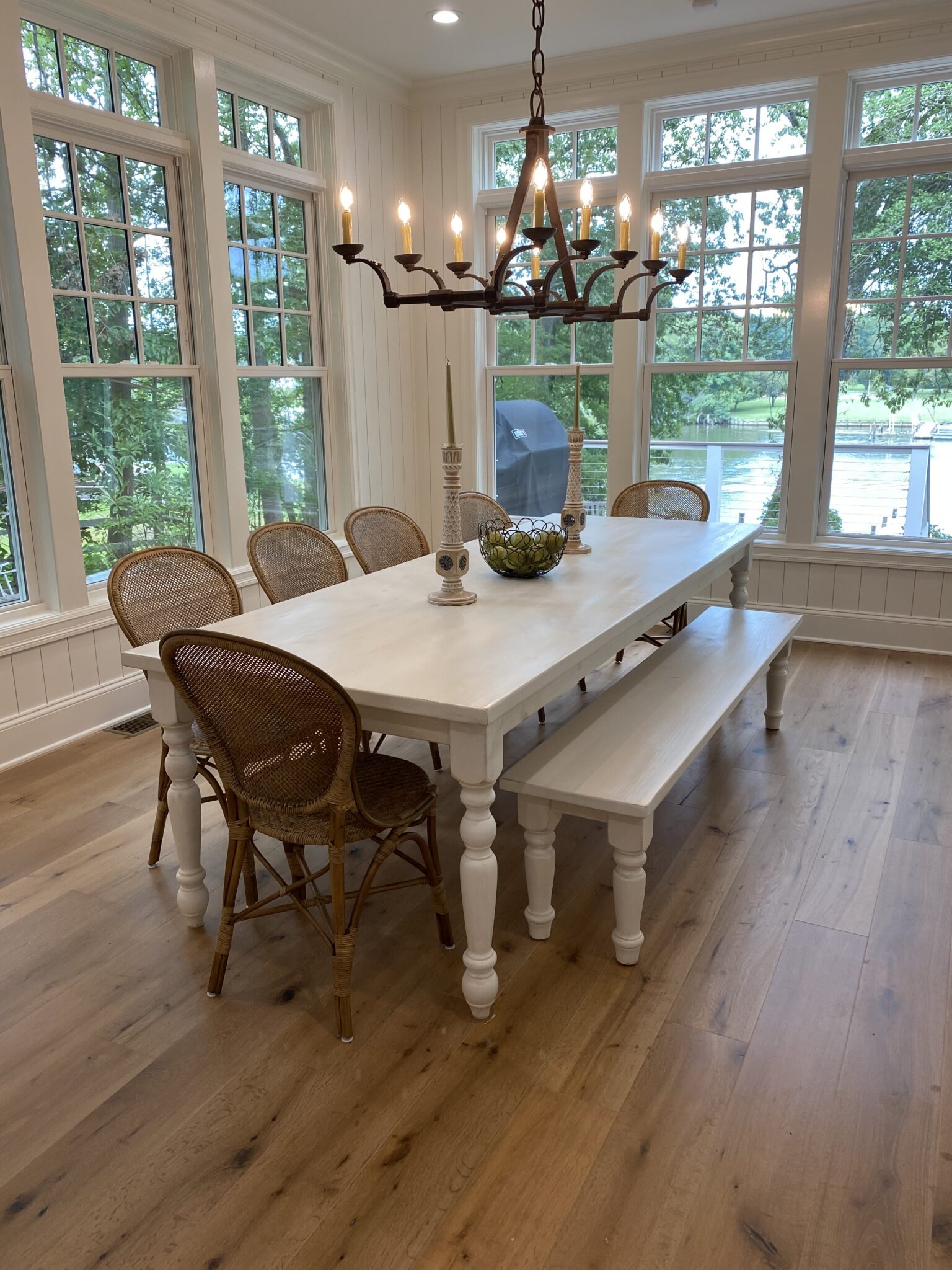
Trestle vs. pedestal vs. four-leg tables: what changes?
Start with the seats you use every day. Then consider where extra guests would sit. A clear stretch of tabletop does not always mean there is a clear place for a chair underneath it.
| Base style | What to look for | Check before ordering |
|---|---|---|
| Trestle | Two supports set inward from the ends, often connected by a stretcher. | End-seat knee room, support placement, and the path of the base feet. |
| Single pedestal | A central support with a wider base beneath it. | Pedestal width and whether its feet meet your feet or chair legs. |
| Four legs | Legs near the corners, often with an apron below the top. | Clear distance between legs and height beneath the apron. |
When does a trestle dining table work well?
A trestle dining table can be a good starting point for a long rectangular layout. Its supports sit inward from the ends, which can give you more freedom along parts of the table edge. That freedom depends on the actual design and size.
Our Capistrano Trestle Table shows this style. Look at the position of each support beneath the top, then picture your chairs along both sides and at the ends.
For an end chair, check the distance from the tabletop edge to the nearest part of the support. A person needs room for knees beneath the top and feet near the floor. These are different spaces, so one measurement cannot describe both.
Also consider the stretcher, the horizontal piece connecting the supports. Its height and position can affect where diners place their feet. If you plan to use a bench, check how its legs line up with the table base and whether it can slide in as far as you want. Our guide to choosing a dining bench covers that seating choice in more detail.
Does a pedestal table give you more legroom?
A single pedestal removes corner legs from the seating perimeter. That can make chair placement more flexible, especially around a round top. However, the central column and its supporting feet still take up space.
Pedestal bases are not limited to round tops. Our Dover Single Pedestal Table is a rectangular example to explore. Compare the top and base together. A generous tabletop does not tell you how far a chair will tuck in or where a diner’s feet will land.
If you choose a round tabletop, chairs angle toward one another as they approach the center. Check the widest part of each chair, including arms and splayed legs. Moving the chairs around the edge may help avoid a base foot, but it still needs to leave comfortable space between people.
Some tables use two pedestals instead of one. Those supports create a different seating layout, so review their placement separately. The word “pedestal” alone is not a guarantee of a particular amount of legroom.
What should you check on a four-leg dining table?
On a four-leg dining table, check the usable opening between each pair of legs. Stretchers or braces can reduce that space. For side-by-side chairs, the clear opening is an important measurement. Compare it with the chairs’ widest points and the space you want between them.
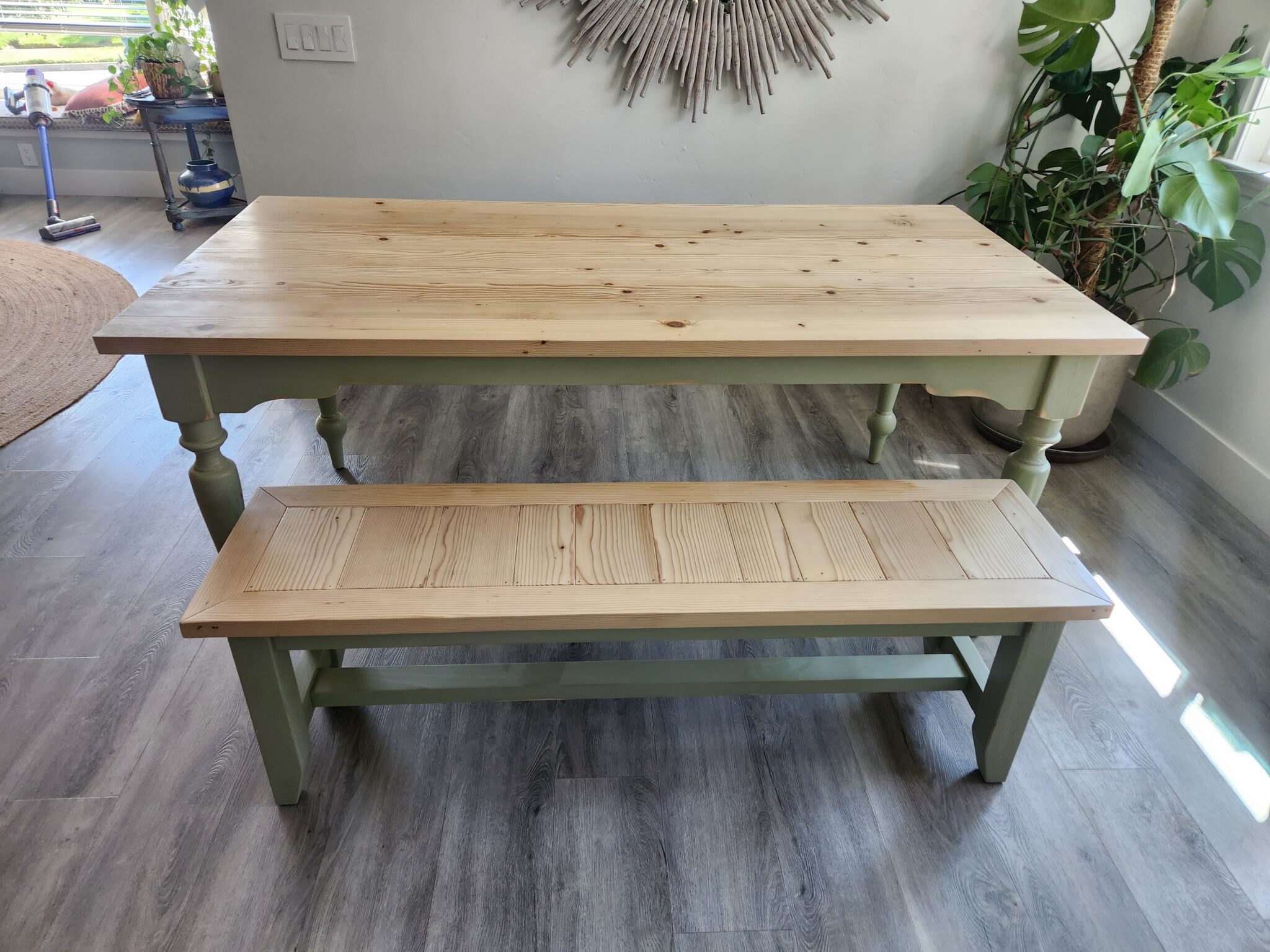
Our Cadence Farmhouse Table offers a familiar example with turned legs and an apron beneath the top. The apron is the horizontal frame below the tabletop.
Overall table height is not the same as chair-arm clearance. A chair arm may fit below the top but stop against the apron. Measure from the floor to the lowest obstruction along the path where the chair will slide.
For illustration, an arm that reaches 26 inches from the floor will not slide beneath an apron with 25 inches of clearance. Those are example measurements, not specifications for a VMW product. Compare your actual chair with the exact table size you are considering.
Which measurements help you choose the right base?
Before comparing a trestle vs. pedestal table by appearance alone, gather these five details. Photos of your chairs and a simple seating sketch can help explain anything that is hard to describe.
- Chair width: Measure the widest point, including arms and legs. For multiple chairs, include breathing room between them.
- Seat and arm height: Record both from the floor. Compare them with the underside of the top, apron, or any other obstruction.
- Clear space between supports: Ask for the opening where each chair will sit, rather than using the full tabletop length.
- Base and foot placement: Check the supports at knee height and floor level. Include end seats and bench legs in your plan.
- Room to pull out: Allow for the chair in use, nearby furniture, and the route people take through the room.
Use your current dining setup to test what feels comfortable. Pull out a chair, sit down, and have someone walk behind it. For overall table planning, our dining table size guide is a starting point. Confirm the seating arrangement against your chair and base measurements before choosing a size.
Can custom sizing help your table and chairs work together?
If your chairs almost fit, a custom request may be worth discussing. Share the VMW design you like, the proposed table dimensions, your chair measurements, and your everyday seating plan. Explain the fit problem you want to solve.
Changing the top size alone does not guarantee more space between the supports. Base placement and proportions also need review. Our team will confirm which modifications are possible before you order. Start with our Customize Your Furniture page; custom work begins with a VMW design.
Once the layout works, choose your wood and finish. Premium Northern Oak is available as a premium upgrade by email quote. Oak has its own stain options, so confirm the choices for your selected design. Review our furniture finishes and ask for available Live Photo Samples. Natural grain, tone, and lighting affect appearance, and exact color matching cannot be guaranteed.
Find a dining table that works with your chairs
Start with a base you like, then check each seating position. A few careful measurements can help you choose a table that feels comfortable at breakfast and when everyone gathers for dinner.
Browse our handcrafted dining tables, or email info@vintagemillwerks.com with the product link, preferred size, chair measurements, and seating needs. Customer Service can help you review the details before ordering.
Email info@vintagemillwerks.com for current lead times before ordering. Our ordering and delivery FAQ explains production and shipping.
Neither style guarantees more legroom. Compare the position of the supports at knee height and floor level. A trestle can affect end seating, while a pedestal and its feet can affect how far chairs tuck in. Check the exact design and size with your chairs.
Measure each chair at its widest point and record its seat and arm heights from the floor. Compare those measurements with the clear opening between the supports and the space below the apron or tabletop. Also allow room to sit, pull out the chair, and walk nearby.
No. A bench can be shorter than the tabletop but still meet the table legs, base feet, or stretcher. Check the bench dimensions and leg placement against the usable opening beneath the exact table you are considering.
We can review a custom request based on a VMW design. Email info@vintagemillwerks.com with the product link, proposed table size, chair measurements, and seating plan. Our team will confirm feasible changes and pricing before you order.
No How-to block is needed for this comparison article. Let Yoast generate structured data from the FAQ block; do not add a second FAQ schema script. Yoast FAQ block documentation.

